


Montreal Pediatric Occupational Therapy
Play, Develop, Evolve...
Is your child struggling with...
-
Difficulty with handwriting or holding a pencil
-
Trouble focusing or staying on task
-
Sensory sensitivities (noise, textures, transitions)
-
Challenges with daily routines (getting dressed, eating, etc.)
-
Emotional regulation or frequent meltdowns
You're not alone...
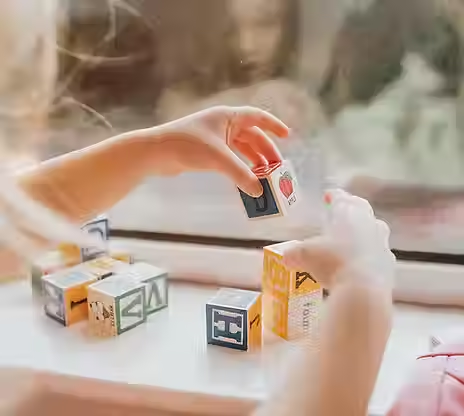
Fine Motor Skills
Fine motor skills involve the coordination of small muscles in the hands and fingers to perform precise movements.
Occupations that use fine motor skills include:
-
Self-care tasks: Zipping, buttoning, tying shoelaces, brushing teeth, using utensils
-
School-related activities: Writing, cutting with scissors, using a ruler
-
Work and hobbies: Typing, playing musical instruments, painting
Gross Motor Skills
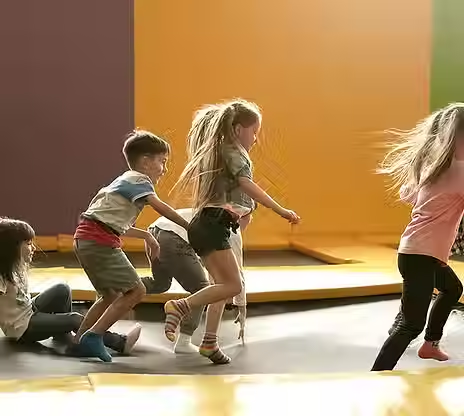
Gross motor skills involve the coordination of large muscle groups to perform movements that require strength, balance, and coordination.
Occupations that use gross motor skills include:
-
Self-care tasks: Walking, getting dressed, climbing stairs
-
Play: Running, jumping, throwing/catching a ball, riding a bike
-
Work and daily tasks: Lifting, pushing/pulling, carrying groceries or books, keeping upright posture at desk
-
Sports and exercise: Swimming, dancing, yoga, team sports
Emotional Regulation
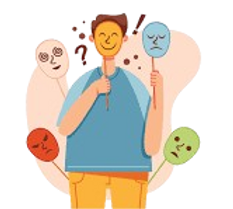
Emotional regulation skills involve the ability to recognize, understand, and manage emotions in a healthy way. These skills help individuals respond appropriately to different situations, control impulses, and cope with stress.
Occupations that use emotional regulation skills include:
-
Self-care and relationships
-
School and work: Coping with stress, staying focused, adapting to challenges, building self-esteem
-
Social interactions
Executive Functioning Skills
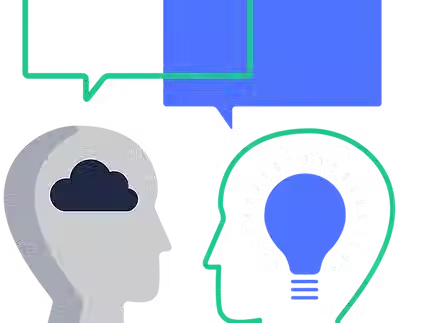
Executive functioning skills are cognitive processes that help with planning, organization, problem-solving, time-management, and impulse-control.
Occupations that use executive functioning skills include:
-
Self-care and daily routines: Following a daily routine, managing time, remembering appointments
-
School and work: Organizing materials, prioritizing tasks, completing assignments on time
-
Social interactions: Taking turns in conversation, understanding social cues, managing emotions in conflicts
-
Problem-solving and decision-making: Adapting to changes, making plans, troubleshooting issues

Sensory Processing Skills
Sensory processing refers to the way the brain receives, interprets, and responds to sensory information from the environment and the body.
Occupations / life skills affected by sensory processing challenges:
-
Self-Care Tasks (dressing, brushing teeth, bathing)
-
Eating a well-balanced diet
-
Fine and Gross Motor Skills (handwriting, catching a ball, riding a bike)
-
Social Participation (handling crowded or noisy environments, engaging in play)
-
Attention and Learning (staying focused in class, following instructions)